What you see and what you do not
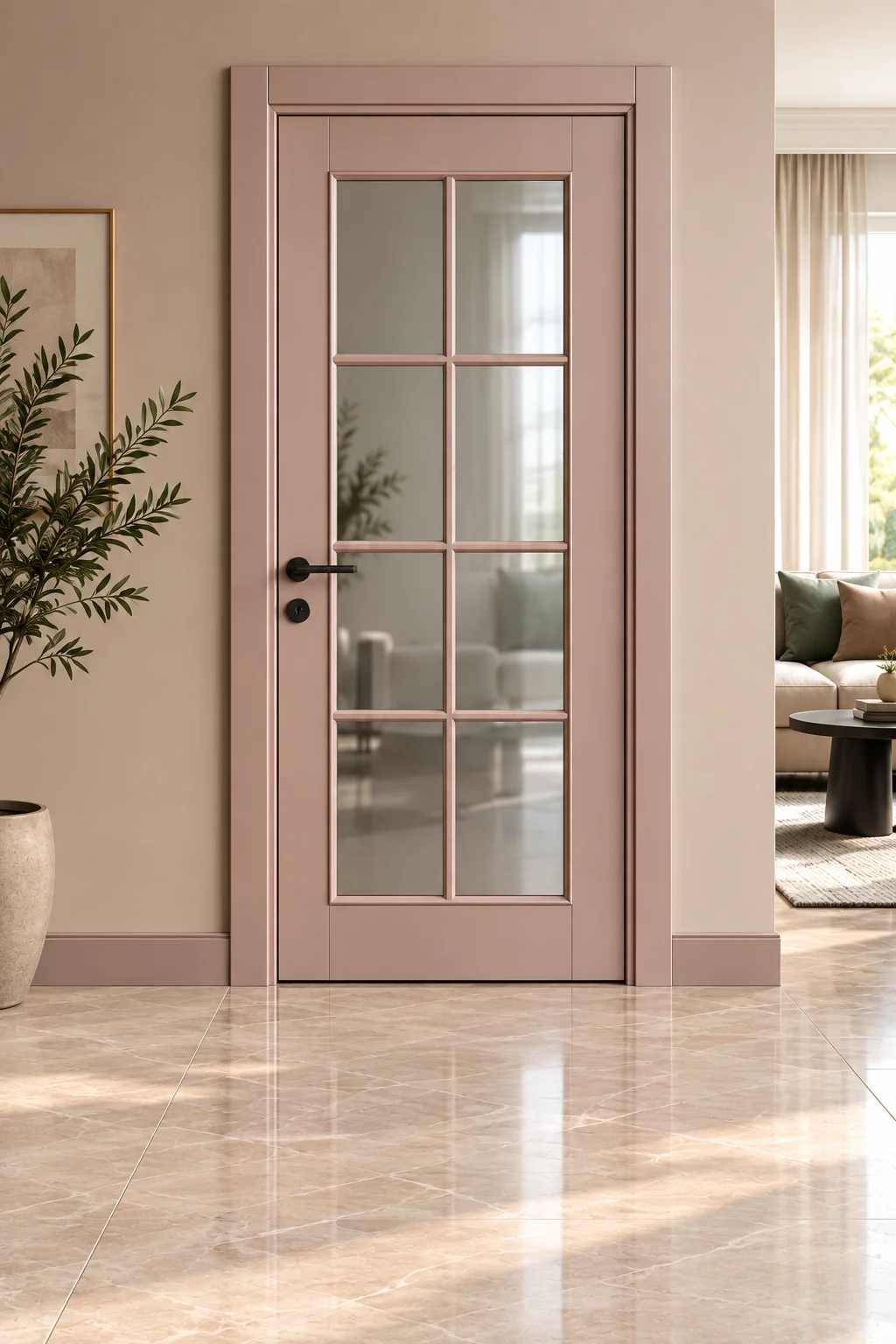
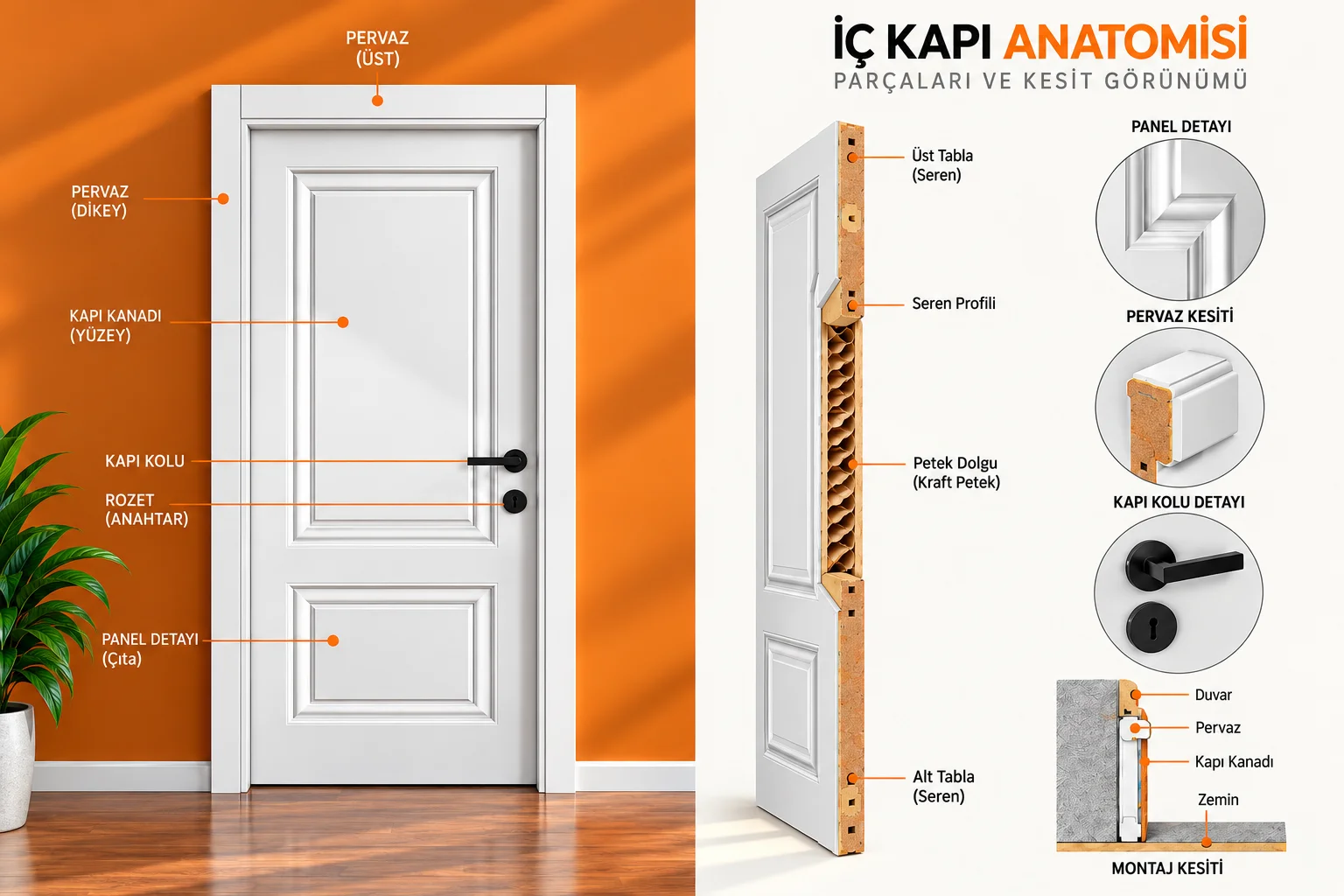
Look at a door and you see the architrave, the leaf, the handle and the rosette. The parts that keep it closing properly for years and resisting knocks and humidity changes are inside the leaf. A Doreya door is built around four main components.
36 mm sandwich MDF frame
The frame is what ties the leaf to the wall. A sandwich MDF build moves less with humidity and temperature than a single MDF slab, so hinges and strike plates stay put years later.
45×35 mm reinforced stile
The stile is the skeleton running around all four edges of the leaf. The 45×35 mm reinforced stile is where hinge screws, the lock body and the handle bite. Whether the leaf sags or the handle loosens over time depends largely on this profile.
Kraft honeycomb core
The kraft honeycomb filling the stile is a paper structure of hexagonal cells. It holds the two faces of the leaf at a fixed distance, keeps the surface from caving despite the low weight and softens the sound of the door closing.
UV- and scratch-resistant surface
Melamine, lacquer or PVC — whichever series you choose, the surface is produced to resist yellowing in sunlight and scratching in daily use. That is the precondition for a door keeping its first-day look for a long time. The anatomy drawing and the measurement guide are both in the 2026 catalogue.